




PTC will end renewals for legacy Windchill licenses after September 30, 2026.
At that point, customers must choose a path forward:
- Migrate to PTC’s new ePLM licensing mode
- Transition to a different PLM platform like ENOVIA
- Use an overlay approach to buy time
Each option carries different costs, risks, and long-term implications.
This article explores each of these options for organizations at a Windchill migration crossroad:
- Remain with PTC: The efforts required to upgrade and migrate within the existing ecosystem.
- Switch to an alternative PLM platform: Who has transitioned, why and what the migration effort looks like.
- Adopt an overlay approach: Extend flexibility and defer immediate migration decisions.
Windchill ePLM vs Legacy Licensing: What Actually Changes
Windchill ePLM (Enterprise PLM) is PTC’s new licensing model for its Windchill PLM portfolio introduced on July 1, 2025.
Unlike its legacy licensing model that splits features into many add-ons or tiers (like Base, Advanced, Premium), this new license model groups those capabilities under broader roles (like Standard Author, Design Engineer, etc.).
Essentially, ePLM is an updated version of Windchill’s license model where a single license covers multiple features that used to be sold separately in the past, making licensing highly customized and fragmented. Many legacy on-premise systems are also several versions behind with old customizations.
Why is PTC Pushing the Transition?
- As of the same date as ePLM was introduced, the legacy Windchill licensing tiers were moved to renewal-only status. Any contracts renewing after July 1, 2026 will be required to modernize to the ePLM.
- After September 30, 2026, legacy packages will no longer be able to be renewed.
- Compounding this shift, standard support for Windchill version 12 ended in June 2024, with version 13 support scheduled to end in June 2027, suggested by PTC’s four-year support window following the First Customer Shipment (FCS) date. This means that at that time companies running on expired licenses will be unsupported.
As a result, existing Windchill customers using legacy licenses are under increasing pressure to migrate to the ePLM licensing model.

All these are for the future compatibility with Windchill+ cloud deployments.
ePLM is the “strategic base” for all future PTC innovations, including Windchill+, its next-generation SaaS PLM platform. By consolidating legacy license bundles into a role-based structure, and mapping these roles to Windchill+, which is also persona-based, PTC is trying to ensure that on-premises deployment aligns with the Windchill+ architecture.
Essentially, it’s a strategic path from legacy licenses to ePLM licenses, and ultimately to Windchill+.
3 Paths for Windchill Customers
By making legacy licenses expire in September 2026, PTC has effectively closed the “do nothing” option: every Windchill customer must now actively choose a path forward.
There are three options Windchill customers now face:
- Stay with PTC: Migrate to ePLM and eventually Windchill+
- Switch to another PLM platform: Migrate to ENOVIA/3DEXPERIENCE or Teamcenter
- Buy time with overlay PLM: Place a new platform on top of existing one and allow it to retire piece by piece
Path 1: Stay with PTC
Transition from legacy to the new ePLM license is much more than licensing change, it’s essentially a multi-phase program to de-customize and standardize so that it’s easier to eventually migrate to Windchill+:
- Auditing all customizations
- Cleaning legacy data
- Upgrading the software version
- Remapping user roles to new license types
- Rebuilding or retiring customizations
More technical efforts are required for:
- Role mapping: To avoid capability gaps or over-licensing, organizations must analyze which legacy modules each user currently relies on and then determine the appropriate ePLM role(s) to cover those capabilities.
- Customization: Many legacy on-premise systems are several versions behind, and some have old customizations that couldn’t be carried forward. The more a company customized to fit their specific processes, the more this feels like a partial reimplementation.
- Legacy data cleaning: Companies that have been running Windchill for years often have accumulated inconsistent part numbering, orphaned documents, and unresolved change orders.
Customers heavily invested in Windchill still face new layers of cost: revalidation, system migration to Windchill+, and continued integration with tools like Codebeamer.
Path 2: Switch to Another PLM Platform
Switching to another PLM platform can feel the same or even more amount of migration pain. But when seen in the long term, it is a platform reset opportunity that can help you gain the true “digital thread”. In the short term, there are proven benefits with primary alternatives such as ENOVIA.
1) Proven, cloud-native platform with long-term stability
While Windchill is still evolving toward SaaS maturity, ENOVIA is already proven at scale. It’s SaaS-native, and ready now. That means less risk, faster adoption, and immediate value.
In addition, Dassault Systèmes never forced existing customers to restructure their data when upgrading versions, because the underlying model stayed consistent. That means customers can move forward on a SaaS platform that evolves continuously, with less disruption and lower infrastructure burden.
2) Unified platform spanning design, simulation, manufacturing, and PLM
Different from Windchill’s file-based data model, all the information in ENOVIA is object-oriented (like a barcode that records everything) and interconnected in one web. Dassault extends that web to include PLM data, CAD, simulation results, manufacturing process, project collaboration, and requirement management.
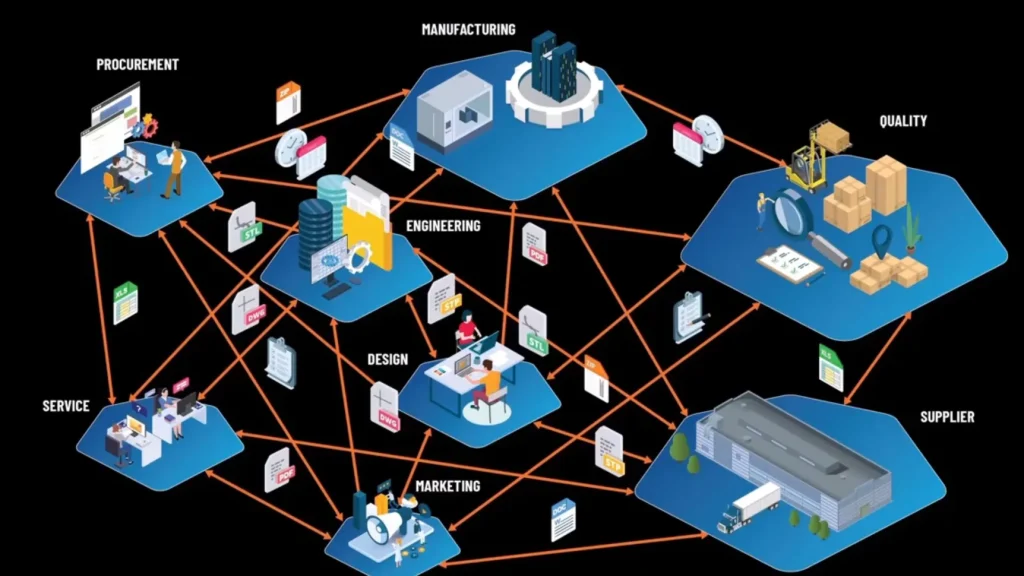
3DEXPERIENCE also brings quality, compliance, and many other capabilities on one platform, reducing the effort to connect tools and maintain them.
For example, Windchill is a PLM system that integrates with other tools such as Creo and ThingWorx. They remain as separate systems exchanging data across boundaries. Also, Windchill alone doesn’t cover systems engineering and software requirements management – it needs its bolt-on Codebeamer for that.

ENOVIA Connected Software Engineer
In contrast, ENOVIA on the 3DEXPERIENCE platform already integrates ALM-like functionality natively. ENOVIA has a dedicated Connected Software Engineer (XSF) role for ALM, and it doesn’t require two full systems to manage. Designed with openness as the cornerstone, 3DEXPERIENCE handles requirements management, systems engineering collaboration, software and hardware traceability, and governance without handoff and translation between systems.
3) Faster time to value
Through connected, out-of-the box workflows, ENOVIA enables faster path to value, supported by role-based experiences (each user gets a curated, pre-configured set of apps matching their job function).
Migrating to 3DEXPERIENCE doesn’t mean ripping everything out at once. Its modular approach allows starting with targeted use cases, like change management or traceability, and expanding over time. Unlike Windchill+, there’s no re-validation every time you scale.
ENOVIA vs Windchill:
| ENOVIA | Windchill | |
|---|---|---|
| Cloud-nativeness | Proven at scale with longevity | Evolving toward SaaS maturity |
| Efficiency of managing design, requirements, simulation, manufacturing | High with unified environment | Often requires separate tools |
| Compliance and Collaboration | Built-in traceability, audit readiness, and connected collaboration | Managed across Windchill and Codebeamer |
Who Transitioned to ENOVIA and Why?
Grundfos: Unified platform to accelerate collaboration and traceability at scale
Grundfos had been on a 7-year PLM journey, struggling with disconnected tools and slow manual processes, especially between product, project, and manufacturing teams.
Through a scalable cloud deployment integrated with SAP and CATIA, Grundfos replaced document-centric processes with ENOVIAs model-based data management, unifying data, collaboration, and process control and establishing digital threads to support its 2040 vision.
Envision Energy: Fast global rollout, scale, and measurable business ROI
Envision Energy chose ENOVIA on the 3DEXPERIENCE platform to unify complex engineering, supply chain, and factory processes on a single platform. From order to delivery and service, they now operate with one secure data backbone.
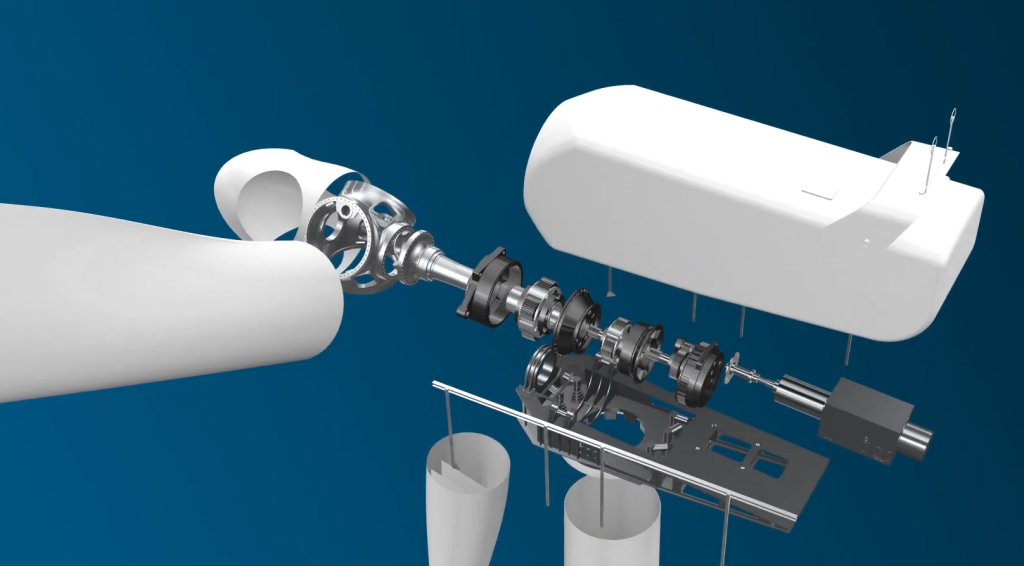
They rolled out the platform in under six months, standardizing workflows across all global teams, and achieved approximately 10 times increase in data query speed, despite handling over 160 million data objects.
On the engineering side, they leveraged ENOVIA for BOM and configuration management, enabling a 10% reduction in spindle weight (via simulation and virtual validation), which delivers millions in annual savings while supporting their virtual twin strategy.
Pepperl + Fuchs: Rapid time to value and scale without customization
Pepperl+Fuchs had a highly fragmented development environment, relying on more than 100 different tools. They transitioned to adopt ENOVIA on the 3DEXPERIENCE platform to consolidate systems, unify processes, and streamline traceability across departments. The deployment began with a phased rollout of 200 users and scaled to 2,500 users across engineering and operations.
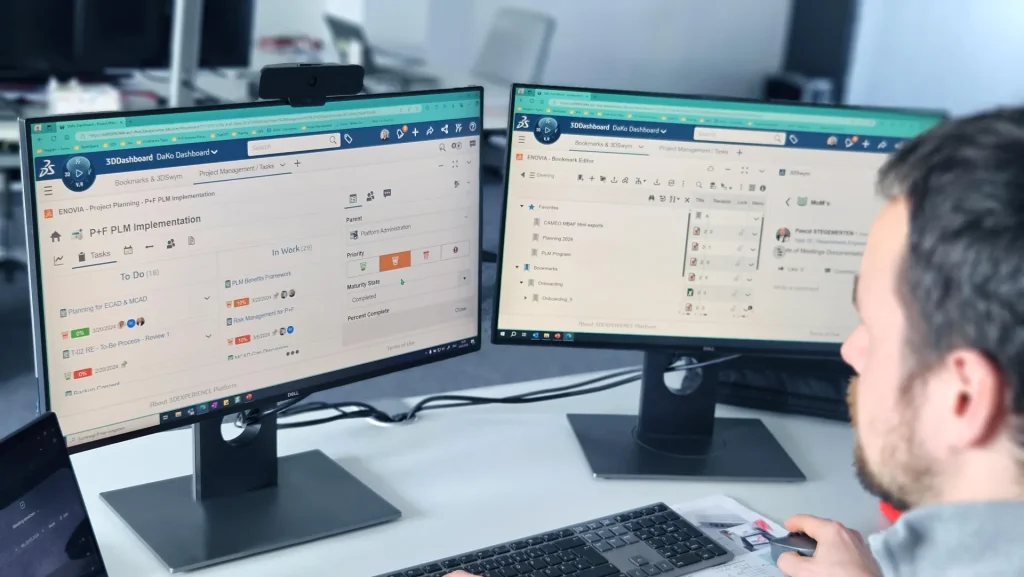
Benefits:
- Fast deployment with an out-of-the-box solution with no customization needed
- 700% improvement in traceability
- 800% reduction in engineering change complexity
Ashok Leyland: Reducing IT burden while scaling with unified, cloud-native collaborative platform
Ashok Leyland was running an older 3DEXPERIENCE deployment alongside other PLM and PDM systems across separate business units.
It transitioned to a fully upgraded ENOVIA platform to unify multiple siloed systems into one streamlined environment, empowering over 1,200 users across five locations to access real-time engineering data.
Benefits:
- Lowered PDM infrastructure costs
- Reduced neutral file conversion time
- Improved cross-unit design reuse
- Stakeholder collaboration and delivery quality
Technical efforts for migrating from Windchill to ENOVIA
Depending on project complexity, migrating from Windchill to ENOVIA can take the same amount of or more technical efforts than transitioning from Windchill legacy licenses to ePLM and Windchill+.
Key concerns:
Different data model
The underlying data model and object structure of ENOVIA differ significantly from Windchill’s, raising concerns that existing data, workflows, or lifecycle states won’t fit neatly into the new system.

TriMech helps migrate with meticulous mapping and data cleansing, identifying how each type of object, attribute, and state in Windchill corresponds to an equivalent in ENOVIA’s model, then configuring mapping rules and transformation scripts accordingly. TriMech experts also run multiple test migrations and data validation cycles to catch any mismatches or missing links, then refine the mapping rules until all core product data, configurations, and history carry over accurately.
3rd-party integration loss
Many organizations have 3rd-party systems or custom integrations connected to their PLM (e.g. ERP finance systems, supply chain databases, custom analytics, or specialized engineering tools). People might worry that switching to ENOVIA might break or eliminate these connections if the new platform doesn’t natively support them.

In practice, Dassault Systèmes’ Enterprise Integration Framework (EIF) is a robust, built-in integration architecture within the 3DEXPERIENCE platform that connects PLM with other enterprise systems. By providing standard, event-driven tools and pre-built connectors, EIF helps ensure that critical third‑party links remain intact on the new platform, minimizing disruptions and manual work that often plague migrations.
CAD continuity
In multi-CAD organizations, there are concerns about whether ENOVIA will handle CAD files and in-progress projects smoothly that are managed in Windchill with a certain CAD software.

Collaborative Circuit Board Designer
In practice, ENOVIA does support third-party CAD tools through connectors and multi-CAD integration modules. All components and CAD files can be brought into a unified 3DEXPERIENCE assembly structure with connectors, retaining their attributes and ensuring correct version/revision control.
TriMech often uses a phase migration approach by integrating Dassault CAD tools with ENOVIA, confirming the new PLM’s support for all necessary CAD functions, and then gradually phasing out the old PLM.
Choose this path if:
- You want a unified platform across design, requirements, manufacturing, and quality
- You’re aiming for a true digital thread
- You prefer SaaS‑native PLM with long‑term scalability
Path 3: Bridge with an Overlay PLM
If you want less disruption, there is a 3rd option to consider: Put a modern layer on top of your legacy Windchill while the old system continues running in the background. Over time, the platform can optionally become the long-term system of record once you’re ready.

Aras Innovator Workflow Process
Aras Innovator is the open, low-code platform built for flexibility.
- It delivers a modern UX and new capabilities quickly; there is no need to wait for a full system overhaul.
- Its open, integration-friendly architecture supports mixed CAD/ERP/MES environments and preserves data control.
- It can incorporate existing custom processes without stripping them out, avoiding the rework often required when standardizing on Windchill+.
However, the overlay approach doesn’t eliminate the need for a long-term decision. It defers it to a time when you’re better prepared. Many companies using Aras as an overlay eventually transition fully to Aras as their main PLM platform once it’s proven out.
Choose this path if:
- You need fast wins without disrupting current operations
- You want to preserve existing custom processes
- You’re not ready to commit to a full migration yet
How TriMech Helps
As a trusted provider of PLM solutions and PLM services, TriMech supports organizations throughout the PLM lifecycle from strategy and deployment to migration and integration, as well as training and ongoing optimization.
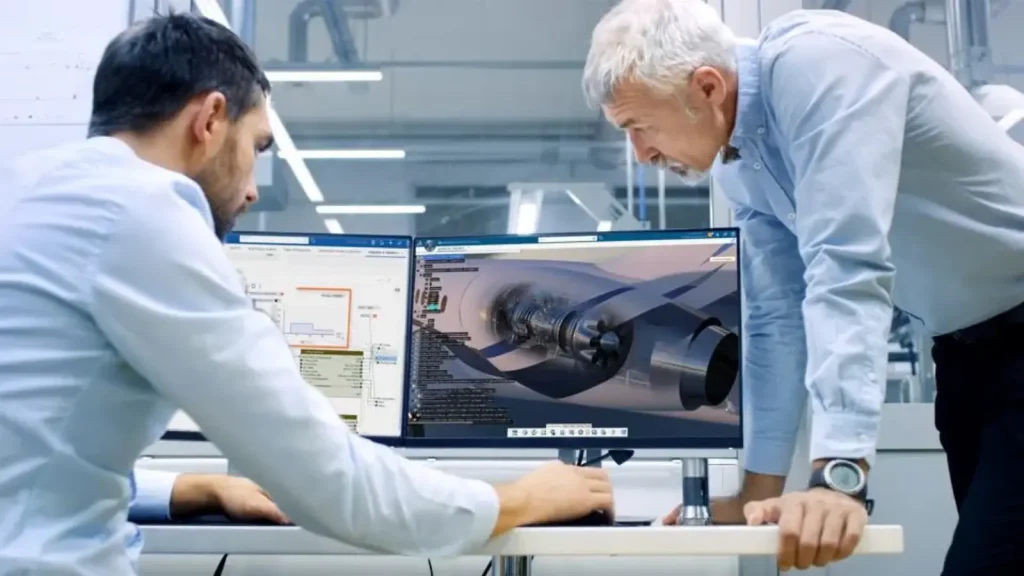
For mitigating the complexity of transition to 3DEXPERIENCE, we can take a phased approach, prioritizing areas with the highest need first. Our team provides extensive support during the transition to minimize disruptions and ensure a smooth implementation.
Contact us for evaluating your options.
FAQs
What happens if we don’t migrate to ePLM by September 30, 2026?
After September 30, 2026, legacy Windchill license packages can no longer be renewed. With many old versions’ support ending, organizations running on legacy licenses risk operating on unsupported software, which can lead to security exposure, compliance issues, and increasing operational risk. At that point, companies are forced into a reactive migration instead of a planned one.
How long does a Windchill to 3DEXPERIENCE migration take?
A Windchill to 3DEXPERIENCE migration typically ranges from several months to over a year. The timeline depends on data volume, customization depth, number of integrations, CAD landscape, and how standardized current processes are. Heavily customized, multi‑CAD environments with long PLM histories require more effort and phased execution
What data is hardest to migrate out of Windchill?
The most challenging data to migrate includes highly customized objects, historical change data, complex BOM structures, and legacy workflows tied to custom code. Inconsistent part numbering, orphaned documents, and unresolved change orders also increase migration complexity and require upfront data cleansing.
What does ‘overlay PLM’ actually mean?
An overlay PLM places a modern platform on top of an existing PLM system, allowing both to run in parallel. New processes and user experiences move to the overlay system while legacy Windchill continues operating in the background. Over time, functionality and data can be migrated incrementally, reducing disruption and buying time for a long‑term decision.
Is ENOVIA/3DEXPERIENCE unsuitable for small or mid-sized teams?
3DEXPERIENCE is modular and scalable. You can deploy what you need today and add capabilities as your business grows. 3DEXPERIENCE has many start-up and SMB customers because it is ideal for mid-sized organizations that want to simplify operations, not get locked into costly, complex IT stacks.
Is it safe to share sensitive data like our product IP through a cloud platform?
Yes. The 3DEXPERIENCE platform uses enterprise-grade security, including granular access controls, secure data storage, and encrypted transmission. You retain full ownership and control of your IP while enabling secure collaboration. It is backed by globally recognized certifications (ISO 9001, ISO 27001, ISO 27701) and aligns with frameworks like OWASP and NIST to meet strict security and compliance standards.
What does the 3DEXPERIENCE platform offer that Windchill doesn’t?
It adds real-time collaboration, low-code flexibility, and full lifecycle integration across engineering, quality, and manufacturing on a single platform, without the wait for upgrades, deploy scripts, or syncing/rendering data.
Will the transition to the 3DEXPERIENCE platform be disruptive to our teams?
No. We support a side-by-side transition, guided onboarding, and role-based training, so users only learn what’s relevant to them. Most teams ramp faster, not slower.
Is the 3DEXPERIENCE platform suitable for regulated industries?
Yes. The 3DEXPERIENCE platform supports compliance requirements including audit trails, electronic signatures, and validation-ready configurations for FDA, ISO, and other standards. 3DEXPERIENCE has pre-validated templates and traceability features for GxP and other regulated environments, including audit trails, electronic signatures, and secure access.
What is the expected ROI?
Because 3DEXPERIENCE is cloud-native SaaS, you can eliminate a lot of costly IT overhead related to hosting software, scripting integrations between siloed tools (like Windchill + Codebeamer), and costly upgrade cycles. In other words, 3DEXPERIENCE simplifies your tech stack and reduces operating costs.


