




What is Product Lifecycle Management (PLM) Software?
Product Lifecycle Management (PLM) software is a system that manages everything about a product, from the first idea, through design and manufacturing, all the way to when it's retired. It's a single place where all teams (engineering, manufacturing, sales, suppliers) can find and work with product information.
Key Characteristics of PLM Software
- Full-cycle tracking: PLM enables a seamless flow of data that connects a product’s requirements to its design, manufacturing, and performance.
- Cross-functional: PLM acts as a central hub to streamline the flow of information and coordinate teams.
- System integration: PLM software doesn’t work alone. It typically connects with other enterprise systems, such as CAD software and ERP to keep data synchronized.

PLM Capabilities
Core Capabilities of PLM Software
Although different PLM software providers offer specialized tools, the core capabilities of PLM software focus on being the “digital thread” that connects everything related to a product:
Solutions
Recommended PLM Software Solutions

ENOVIA/3DEXPERIENCE
- Deep Dassault apps integration: seamless data exchange and workflows across design, engineering, and manufacturing within a unified Dassault Systèmes environment.
- Strong scalability for large enterprises: handling large data volumes for global, complex programs with stringent governance requirements.
- Comprehensive, enterprise-grade feature set: extensive PLM capabilities, project management, document control, and lifecycle governance that support cross-functional processes.
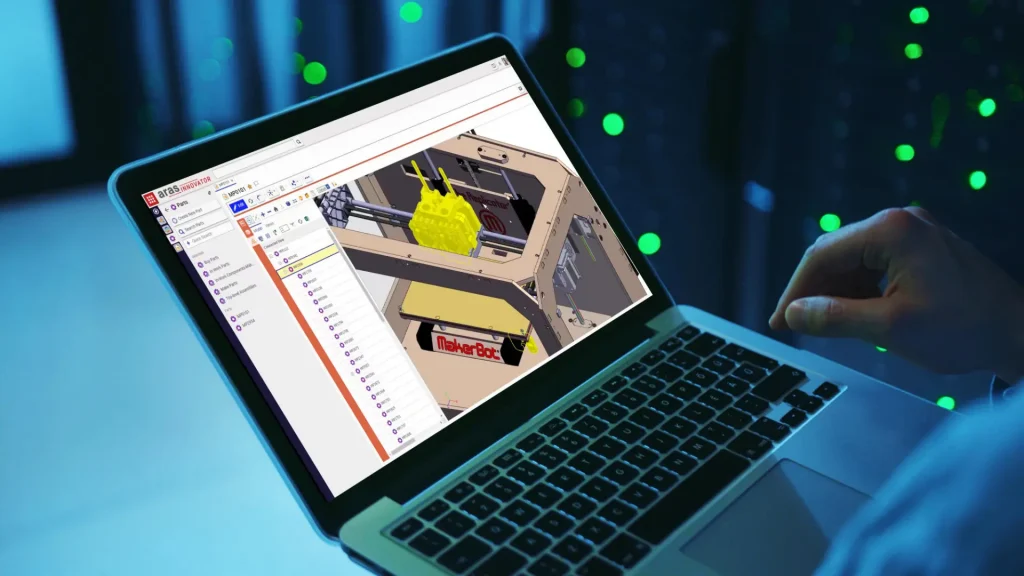
Aras Innovator
- Open & flexible: model-based customization enables faster implementation and easier updates.
- Integration-friendly: web-services API enables integration with existing systems (ERP, CAD, MES).
- Subscription model: reduces long-term ownership cost for large, complex programs, without heavy upfront licensing fees.
PLM
Who is PLM Software For?
- Engineers and Designers: To manage complex 3D designs, track technical changes efficiently.
- Manufacturers and Supply Chain Managers: To see the bill of materials (BOM) and know what parts to order, who to buy them from, and how to assemble them efficiently.
- Quality and Compliance Teams: To ensure the product meets industry regulations particularly for industries like medical devices or aerospace.
- Project Managers: To track project timelines, manage costs, streamline processes, and oversee the collaboration between various departments.
ROI Impacts of PLM Software
PLM
Why Companies Invest in PLM Software
- Contechs, an automotive design and engineering consultancy, used the 3DEXPERIENCE platform (ENOVIA) to streamline the handover of complex design data to OEMs, and manage massive data loads more efficiently than their previous file-based methods.
- Meggitt, a global aerospace and defense leader, worked with TriMech Enterprise Solutions to implement ENOVIA. The new system replaced a massive folder structure (1 million documents across 15,000 folders) with a searchable database, improved efficiency, compliance, and global collaboration.
- Xos, a fast-growing EV truck manufacturer, used the cloud-based ENOVIA to shorten its product development lifecycle, collaborate efficiently with partners, and enables operational scalability with leaner teams.
- Amtech Electrocircuits, an Electronics Manufacturing Service provider, is a high-mix, low-volume business that struggled to manage the Approved Manufacturer List (AML) for multiple customers. By introducing Aras Innovator and integrating it with their MRP and ERP systems, new production introduction(NPI) time decreased from 2 to 3 weeks to 2 to 3 days, and the time to get real-time vendor quotes dropped from days/weeks to just 15 minutes.
- Spartan Motors, a leading developer of custom chassis and vehicles, chose Aras Innovator to manage complex configuration process and integrate SOLIDWORKS PDM Professional. Aras enabled a comprehensive quote for complex changes in just 15 business days, significantly boosting profitability and customer satisfaction.

When to Use PLM Software vs PDM Software
Whether you need a PLM software or PDM software depends on your requirements of scope, function, and business impact.
| PDM (Product Data Management) Software | PLM (Product Lifecycle Management) Software | |
|---|---|---|
| Scope | Design and engineering data | Entire lifecycle from concept to disposal |
| Function | Version control and CAD file management | Cross-functional collaboration, change tracking, BOM and compliance management |
| Lifecycle Focus | Early stages (design and engineering) | All stages (manufacturing, quality assurance, supply chain, service, maintenance) |
| Collaboration | Within design and engineering teams | Cross-functional (design, manufacturing, sales, marketing, support) |
| Business Impact | Efficiency and data consistency in design | Reduced time-to-market, enhanced product quality, improved competitiveness |
| Summary | Keeps all your files, drawings, and versions organized and ensures you’re always working on the correct one | Covers the entire lifecycle - from sourcing materials and defining processes to managing teams, supporting customers, and retiring products |
Talk to a Solutions Consultant
Curious how PLM software can streamline your processes, connect your teams, and accelerate product development? Our specialists can walk you through the possibilities and help you identify the right approach for your organization.


