




Human Factors teams involved in vehicle development will face numerous challenges throughout the vehicle development process. The cause of these is both internal and external from the developing organisation, external factors would be areas such as regulations and human anatomy, the internal factors would be challenges such as design complexity and resource availability.
Design Complexity
As vehicles get more complex, with more controls and functions, the human factors team must tailor the design to ensure that users can reach all controls whilst improving usability and comfort.
Regulatory Compliance
As the human factors team are designing vehicles for multiple regions, they will need to ensure that the vehicle is compliant with all the relevant regulations and standards across the globe.
Distracted Driving
As with the increase of controls and functions within the vehicle, the development of the vehicle will need to consider how to reduce driver distractions by all these features.
Adapting to Autonomous Vehicles
As the development and adoption of autonomous vehicles increase, the consideration for how occupants will utilise the vehicle during both autonomous travel and manual control needs to be factored into to the design of the vehicle.
Globalisation and User Variability
Vehicles are released to multiple markets and vehicle occupants of that will vary on body dimensions, abilities, and age. This can create multiple challenges around usability and comfort as the human factor experts design for a diverse user base.
Interdisciplinary Collaboration
Throughout their studies, the human factors team will have to collaborate with key stakeholders, engineers, designers, and regulatory exports. Ensuring that they communicate effectively across the business can become a challenge.
Evolving User Expectations
Due to external influences, users come to expect more from the in-vehicle technology, whilst maintaining safety and meeting their expectations.
To address these challenges will require that the human factors team be capable of adapting to innovative technologies, regulations and trends whilst having effective communication skills. Throughout the development cycle of a vehicle the human factors team are crucial in the role of improving user comfort, usability, and safety of the vehicle.

By Luke Howard
Luke Howard is a seasoned Senior Account Manager based in the UK with over 8 years of experience in delivering CAD and PLM solutions to Automotive and Aerospace companies. Luke's approach is rooted in solving customer challenges and driving their initiatives. He provides a client-centric solutions, prioritising the success of his partners and clients. Beyond his professional life, Luke's passions extend to both the world of car design and photography. He's constantly intrigued by the latest innovations and technologies in the automotive industry, and he has an eye for capturing moments through the lens. Luke welcomes connections and discussions on how he can assist you in achieving your goals or share insights into the fascinating world of automotive and aerospace. Connect with Luke on LinkedIn
Related Content

7 Benefits of RAMSIS NextGen in the Vehicle Development cycle
We have covered an Introduction to Human Factors, the challenges and how to address these challenges with RAMSIS NextGen and 3DEXPERIENCE in previous blog posts. In this article, we will cover some of the benefits of RAMSIS NextGen during the development cycle. When referring to a vehicle throughout the benefits below, this could be a…

Address the Challenges to Human Factors with RAMSIS NextGen and 3DEXPERIENCE
Following on from our previous article about the challenges that the human factors team faces, now I will look at how we can address those challenges using RAMSIS NextGen and 3DEXPERIENCE. RAMSIS NextGen is the world leading tool for Human Factors and Ergonomics. 3DEXPERIENCE is a business platform providing a multi-disciplinary solution that provides toolsets…
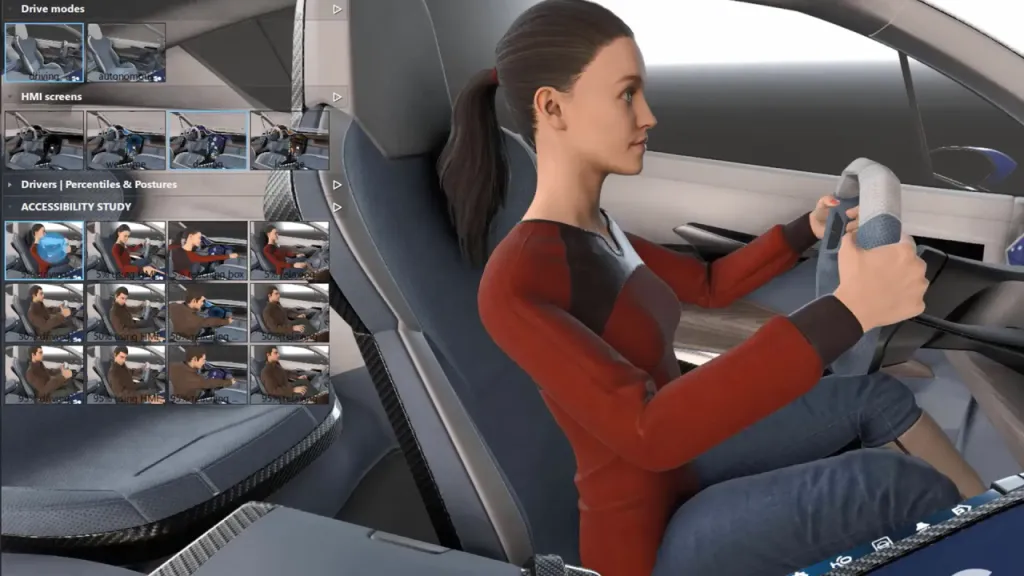
An Introduction to Human Factors
In this article, we will explore Human Factors as it relates to vehicle occupants, both drivers and passengers, for both Automotive and Aerospace. What is Human Factors? The multi-disciplined field of Human Factors is the study of how human beings interact with vehicles and how the vehicle design can be optimised to improve the overall…