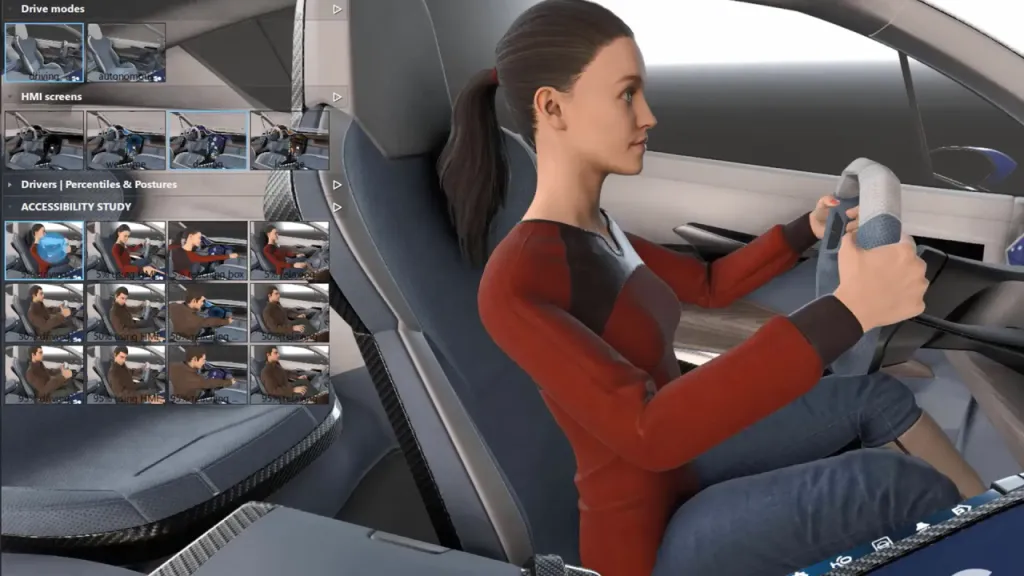

We have covered an Introduction to Human Factors, the challenges and how to address these challenges with RAMSIS NextGen and 3DEXPERIENCE in previous blog posts. In this article, we will cover some of the benefits of RAMSIS NextGen during the development cycle.
When referring to a vehicle throughout the benefits below, this could be a Car, a Truck, a Plane, a Helicopter or even a Tractor. The benefits can be achieved for each and every one of them.
1. Human-Centric Design
Engineers can simulate and analyse how users interact with the interior of the vehicle with RAMSIS NextGen. Occupant interaction is a crucial aspect of the design of any vehicle, especially with safety and ergonomics being so important. This helps to ensure that during an accident any occupants are protected, it also ensures that drivers can utilise the controls effectively.
2. Virtual Prototyping
The vehicle design is completed in CAD, and by using RAMSIS NextGen to conduct testing in the virtual space engineering teams are able test multiple scenarios without the need for creating costly prototypes, saving time and money throughout the development cycle.
3. Occupant Comfort and Experience
To improve the user satisfaction, the optimisation of comfort and the overall experience of the vehicle interior plays a key part, by simulating, evaluating and then enhancing the interior design with RAMSIS NextGen this can achieved. Covering the seat position, ease of use and visibility all play in to improve the overall experience and satisfaction of the users.
4. Iterative Design Improvement
RAMSIS NextGen provides engineers with the ability to conduct quick evaluations allowing for design refinements. By utilising an iterative process such as this results in continuous improvements in ergonomics and vehicle safety.
5. Optimisation of Restraint Systems
With safety being a key area of vehicle development the restraints systems, such as seat belts and airbags, are imperative to the occupant’s safety. By utilising RAMSIS NextGen to evaluate and optimise the design and location of these crucial features, enhancements can be made which result in improved safety levels.
6. Posture Analysis
RAMSIS NextGen allows for in depth posture analysis to be conducted against a multitude of driving scenarios and positions. This provides crucial data to encourage the seat and interiors to be deigned in a way that encourages a more natural and comfortable driving posture, which in turn can help to reduce fatigue and overall wellbeing.
7. Accessibility and Inclusivity
With a variety of physical capabilities within the population and target market, RAMSIS NextGen can be used to conduct assessments on the accessibility of the vehicle, this allows for the creation of my inclusive vehicle designs.
Written by Luke Howard | LinkedIn
“Luke Howard is a seasoned Senior Account Manager based in the UK with over 8 years of experience in delivering CAD and PLM solutions to Automotive and Aerospace companies. Luke’s approach is rooted in solving customer challenges and driving their initiatives. He provides a client-centric solutions, prioritising the success of his partners and clients.
Beyond his professional life, Luke’s passions extend to both the world of car design and photography. He’s constantly intrigued by the latest innovations and technologies in the automotive industry, and he has an eye for capturing moments through the lens.
Luke welcomes connections and discussions on how he can assist you in achieving your goals or share insights into the fascinating world of automotive and aerospace.”