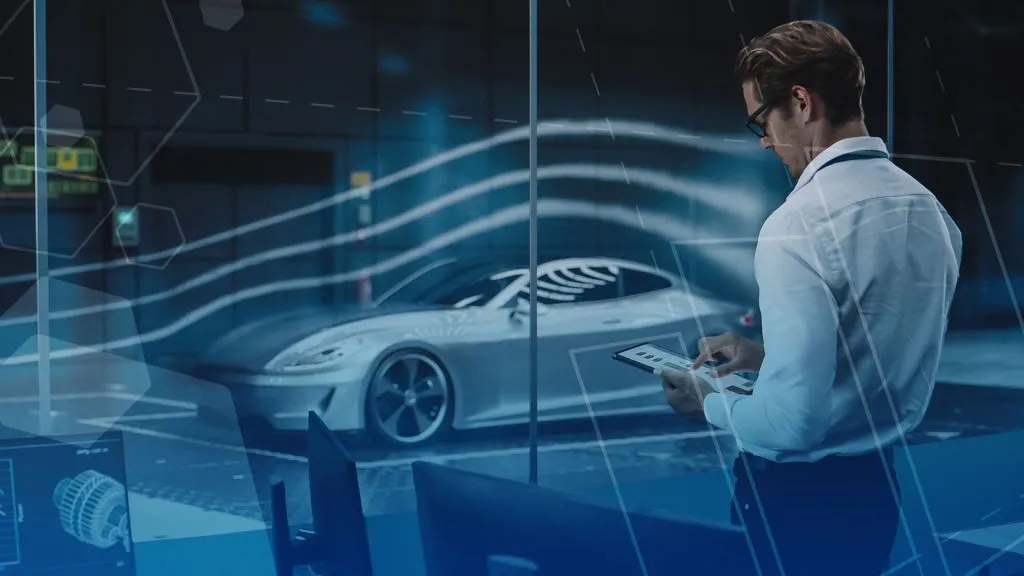

In Motorsport, the ultimate goal of racing is to win. This requires a team of professionals to collaborate on the many complexities involved in the actual design of the cars, as well as adhering to the intricate regulations offered by the Federation Internationale de l’Automobile (FIA) .
A race car’s design entails controlling a number of complex elements, such as the chassis, engine, suspension, and bodywork, with the obvious goal of optimizing the vehicle’s performance.
Whilst making sure performance goals are reached on schedule, it is also critical to ensure that no design choice made on the virtual model should put the driver in danger when the vehicle is on the circuit.
Navigating Racing Regulations
One of the most important first steps in the design and development process of a race car is understanding the regulations.
Aerodynamics is a crucial component of this process since, in addition to being one of the most significant performance variables, it also has other secondary effects, such as cooling the engine or brakes, improving driver comfort, etc. For this reason, it is frequently the subject of extremely stringent and intricate technical requirements.
These rules are essential for setting performance and safety goals because they have a direct impact on the entire development process by focusing attention and resources on achieving these standards. It’s an intensely motivated voyage that calls for unwavering commitment and precise engineering, with the goal of competing for victory on the track.
Simulate to Innovate
The design of race cars has been completely transformed by simulation.
In the past, performance was assessed through physical testing, which required a car, test components, a track, and driver availability. This process took a long time, with manufacturers typically investing six to twelve months before bringing the first car to the racecourse.
All these procedures, however, can be carried out electronically using simulation and a virtual 3DEXPERIENCE twin of the vehicle. Driver-in-the-loop simulators have created new development opportunities by enabling the evaluation of changes on any track in the world. This has reduced the amount of time needed to design the race car and allowed for greater integration into the process.
Many details that were not taken into consideration before are now taken into account in complex models. For example, aerodynamics and the way it affects important parts including driver comfort, brake cooling, and engine cooling. Computational fluid dynamics (CFD) models have also become increasingly complicated over time, opening up the possibility to consider a plethora of previously unreachable aspects.
Physical testing on tracks using real cars and parts was the standard in the past, but simulation has completely changed and revolutionized this procedure. Instead of taking days or weeks to solve a problem, aerodynamic simulations are now 1000 times larger and may be completed in a mere couple of hours.
The design process for Racecars has been transformed by simulation, making it possible to identify optimal performance parameters and guarantee driver safety in the little amount of time available before the first race.
Simulation has become an essential tool in modern racing car design, which is shaped by a careful grasp of regulations and sets the targets for performance and safety. It does this by directly linking the performance of a race car to the efficiency of the design process.
Aerodynamics, chassis design, engine design, and suspension are just a few of the complex elements that are optimized throughout the process to improve the car’s performance. As the fruition of all the labor that goes into creating race vehicles, winning races is the ultimate goal and the most satisfying part of the task.
Utilize 3DEXPERIENCE to Win
With racing regulations and design necessities for race cars being more complex than ever, it is essential for teams to stay ahead of the curve and ensure that their processes are as efficient and innovative as possible. This is where simulation and 3DEXPERIENCE comes in.
With the 3DEXPERIENCE platform acting as a single source of truth to anchor outcome-based processes, and SIMULIA allowing for seamless integration of simulation technologies, there’s no better alternative to ensuring a team’s processes are at peak performance.
Get in touch today to find out more about how our world class tools can aid in the ultimate goal: winning.