



Oracle recently announced the end-of-life of its Agile PLM solution, a decision that will significantly impact organizations that depend on the platform for product development and lifecycle management. While no one wants to hear their enterprise system is losing support, it is important to educate yourself on when it’s happening, how it affects you, and where we move our product lifecycle management.
The Oracle Agile PLM end of life might seem like bad news, but it could lead you to implement a solution to support your organization for years to come.
What is Oracle Agile PLM?
Agile PLM is an enterprise product lifecycle management platform developed by Oracle to help organizations manage product data from concept through end of life. It serves as a centralized system of record for product information, including bills of materials, specifications, change orders, and quality documentation.
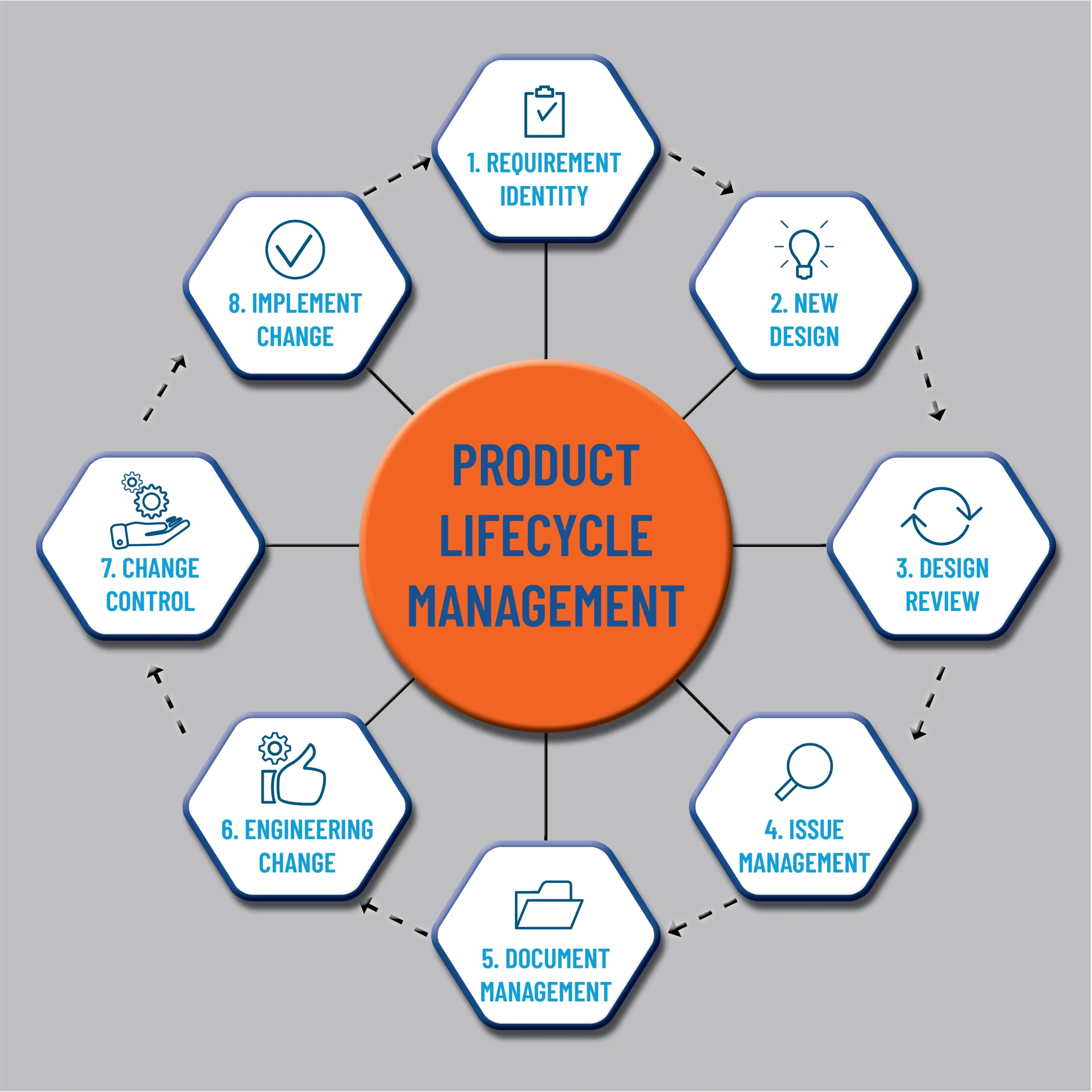
Agile is widely used in manufacturing‑driven industries to support collaboration across engineering, operations, quality, and supply chain teams. By enforcing structured processes and data governance, Agile PLM helps companies improve compliance, accelerate product development, and reduce errors throughout the product lifecycle.
When Does Agile PLM Reach End of Life?
Agile PLM officially reaches its end-of-life in December 2027. While it is not an immediate change, you still need to start planning for a future without Agile to ensure that your new PLM software is implemented and adopted before support officially drops.
At the end-of-life, the PLM products will enter the Sustaining Support mode. During this mode, the software will no longer receive new security patches, regulatory updates, or critical bug fixes. You are encouraged to migrate to another PLM software to avoid issues with your production data.
While Agile officially ends its support in 2027, there are other key dates in the Oracle ecosystem:
- MCAD for SOLIDWORKS 3.6 support ends August 2025
- Agile EDM support ends Augst 2025
- Agile PLM for Process support ends May 2027
- Agile PLM support ends December 2027
- AutoVue 21.1 support ends October 2028
Top Risks of Staying with Agile
Unsupported PLM software is unfortunately everywhere in the world. Many organizations believe the cost of switching to a new PLM software is more than the cost of dealing with security flaws, bugs, and other issues.
The top risks your organization is exposed to by staying with Agile PLM are:
- Regulatory Compliance: For many organizations, maintaining regulatory compliance (ITAR, CMMC, Controlled Goods) is often the most business-critical task. Using unsupported software puts compliance at risk, introducing the opportunity for fines or lost business.
- Security Vulnerabilities: The reason compliance relies so heavily on supported software is that without bug fixes or critical patches, the software is vulnerable to attacks. Staying with an unsupported system increases the risk of data breaches, hacks, and IP leaks as the vendor doesn’t fix flaws.
- Limited Scalability: When a software reaches the end-of-life, features freeze, and no new enhancements are added. Ultimately, you are locked to the functionality you have with no ability to integrate with modern tools or adapt to new business requirements.
- Operational Disruption: With supported software, an issue that takes down production is handled by a dedicated technical support team to get you back up and running quickly. Without support, these issues rely on internal resources or costly third parties to mitigate outages.
Leading PLM Software to Replace Oracle Agile PLM
To prepare for the end of support of Agile PLM, it is important to know where your organization’s next step is going to go. Initially disrupting, this serves as a great opportunity to reevaluate requirements and integrations to choose the best PLM software.
SOLIDWORKS Manage
SOLIDWORKS Manage is often referred to as PLM-lite, as it provides lifecycle functionality to traditional data management from SOLIDWORKS PDM. It provides structured process management for items such as change actions, approvals, and project tracking within a modern PLM ecosystem.

SOLIDWORKS Manage offers a centralized system of record for product data while improving visibility across engineering, manufacturing, and management teams. Its configurable workflows allow organizations to enforce governance and compliance without the complexity of heavily customized legacy systems. SOLIDWORKS Manage also integrates well with CAD tools and other business systems, enabling smoother collaboration and faster decision‑making.
For companies seeking a more approachable, scalable, and supported solution, it delivers enterprise‑level PLM capabilities with lower overhead than traditional platforms like Agile PLM.
ENOVIA
ENOVIA is a strong replacement for Agile PLM because it delivers enterprise‑grade product lifecycle management on a modern, scalable platform. It enables organizations to manage product data, engineering changes, and configurations across global teams using a single, unified system.

Built as part of the 3DEXPERIENCE platform, ENOVIA supports cross‑functional collaboration by connecting engineering, manufacturing, quality, and supply chain stakeholders. Its robust process management and compliance capabilities make it well‑suited for regulated and complex industries.
For companies seeking long‑term vendor support, flexibility, and deep integration with digital engineering initiatives, ENOVIA offers a future‑ready PLM foundation.
Aras Innovator
Aras Innovator boasts a web-based platform to support companies that need to manage product development, multi-site manufacturing, supply chain operations, and quality compliance. It supports core PLM capabilities such as product data management, change control, quality processes, and requirements management within a single system.
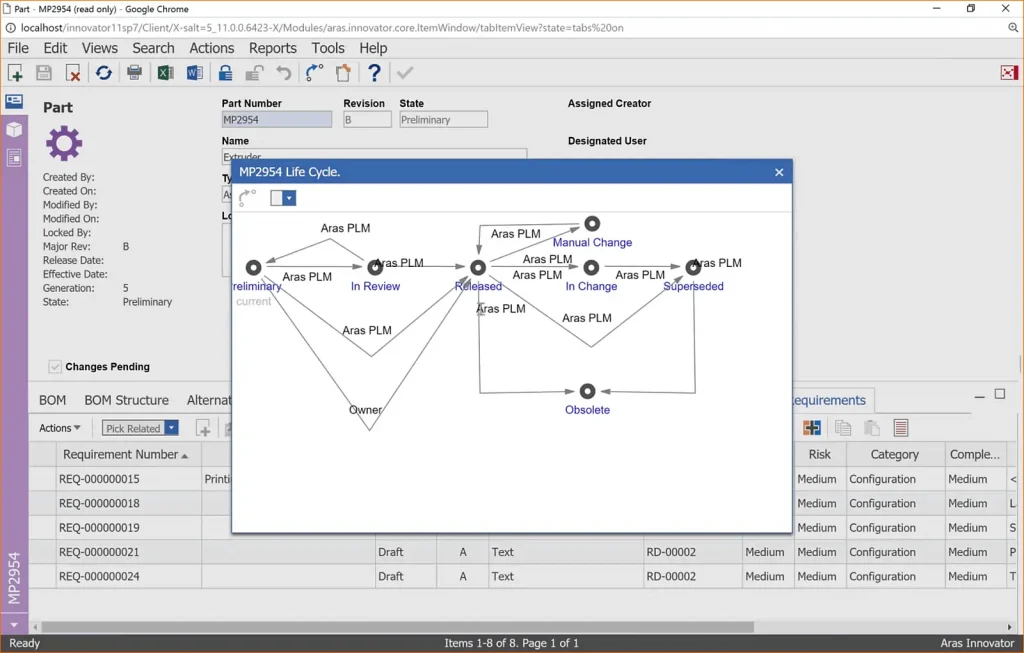
Aras Innovator’s open architecture enables easier integration with ERP, CAD, and other enterprise systems, helping organizations maintain a connected digital thread. The platform is especially well‑suited for complex and regulated industries that require strong traceability and configuration management.
For companies looking to move into the future of PLM, Aras provides a new value proposition to companies of all sizes for managing growing product complexity and fast-changing processes.
Expert Guidance on Agile PLM End-of-Life
Continuing to rely on Agile PLM exposes organizations to growing challenges and risks that can negatively affect business operations. As the end-of-life date rapidly approaches, you need to make sure your company’s data and future are protected.
Choosing your next PLM software can seem challenging, especially when staring at the impending end-of-life of Agile PLM. Fortunately, there is plenty of time to reevaluate your current needs, growth goals, and past compromises to position yourself to find your future PLM software.
To have TriMech’s expert guidance on your PLM future, schedule a complimentary consultation here.


