









In the evolving maritime transport industry, there is a shift towards more sustainable practices. Wind Assisted Ship Propulsion (WASP) is a promising technology that aims to decrease fuel usage and, in turn, lower greenhouse gas emissions. However, the adoption of such technologies poses significant challenges, primarily related to their integration and effectiveness.
This is where advanced simulation tools like SIMULIA PowerFLOW come into play, offering precise aerodynamic analytics to optimize the performance of WASP systems.
Understanding Wind Assisted Ship Propulsion Technology
Wind-Assisted Ship Propulsion involves using wind as a supplementary power source for cargo ships, leveraging devices such as sails, kites, or rotors to harness wind energy. The potential benefits are substantial, ranging from fuel savings to reduced exhaust emissions. However, the performance of these devices can vary dramatically based on their design and the environmental conditions. Thus, integrating WASP technology effectively requires a deep understanding of these variables and their interplay during actual maritime operations.
The Role of SIMULIA PowerFLOW in Optimizing WASP
SIMULIA PowerFLOW stands out in the computational fluid dynamics (CFD) arena due to its unique lattice-Boltzmann based approach to simulating external and internal flows. This simulation software excels in scenarios requiring accurate flow predictions over complex geometries and through varying flow conditions, which is precisely the case with WASP. By applying SIMULIA PowerFLOW, engineers and designers can simulate the aerodynamic performance of various WASP devices in a virtual environment under a multitude of wind conditions and orientations.
The advantage of using PowerFLOW lies in its ability to provide detailed insights into the flow patterns and force distributions, which are crucial for optimizing device designs. For instance, the placement and size of a rotor sail can be fine-tuned based on the simulation outputs to maximize wind energy utilization while minimizing drag. Further, PowerFLOW can simulate the impact of multiple devices operating simultaneously, providing a holistic view of the interactions and potential efficiency gains of different WASP configurations.
The Future of WASP and it’s Challenges
As the maritime industry continues to focus on reducing its carbon footprint, technologies like WASP, supported by advanced simulation tools like SIMULIA PowerFLOW, play a critical role. However, the journey towards widespread adoption of WASP is not devoid of challenges. Issues such as the variability of wind power, the integration of WASP with existing ship systems, and the economic considerations of retrofitting older ships or designing new ones are significant.
The continuous advancements in simulation technology will likely pave the way for more sophisticated and economically viable WASP solutions. As simulation tools become more powerful and user-friendly, they will lower the barriers for innovation and implementation of wind-assisted technologies in maritime transport.
Conclusion
In conclusion, SIMULIA PowerFLOW is proving to be an invaluable tool in the arsenal against maritime emissions, providing detailed, actionable insights that help in harnessing the power of wind effectively. As the technology matures and more data from real-world applications becomes available, it is expected that the simulations will become even more accurate and helpful in driving the adoption of WASP technologies. For an industry that is both ancient and traditionally slow to change, this represents a significant leap forward—a marriage of old-world wisdom and cutting-edge technology to chart a sustainable course for the future of shipping.
Categories
Related Content
5 Ways Simulation Enhances Tire Engineering
The automotive industry is constantly evolving, and tire engineering is no exception. With increasing demands for durability, performance, and sustainability, tire manufacturers must innovate faster than ever. This is where simulation technology, particularly SIMULIA, plays a transformative role. SIMULIA enables engineers to test, refine, and perfect tire designs virtually before they ever reach the road….
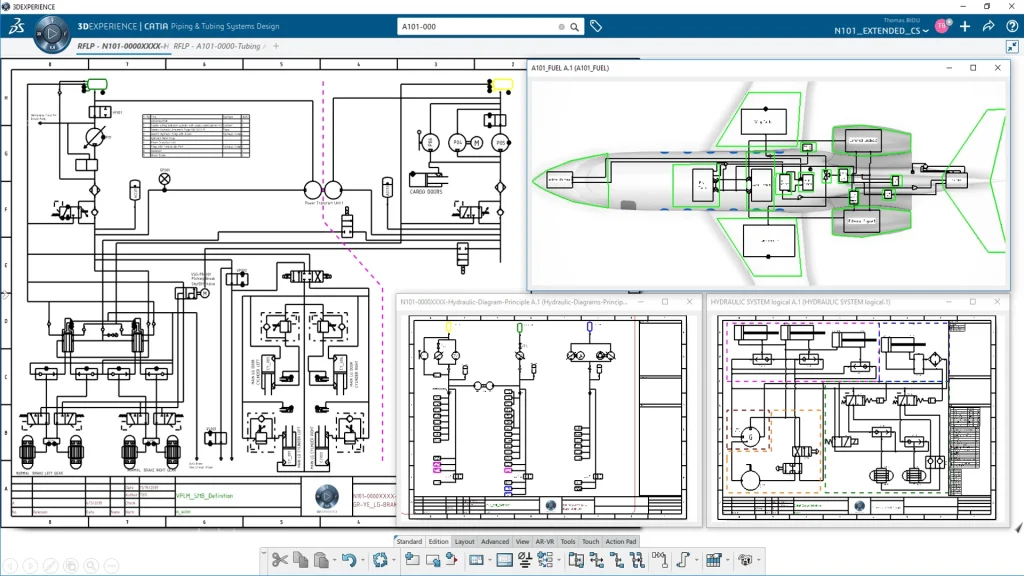
Systems Schematic Engineer
Create discipline-specific intelligent schematics for wiring, cabling, piping/tubing and HVAC systems with the CATIA Systems Schematic Engineer
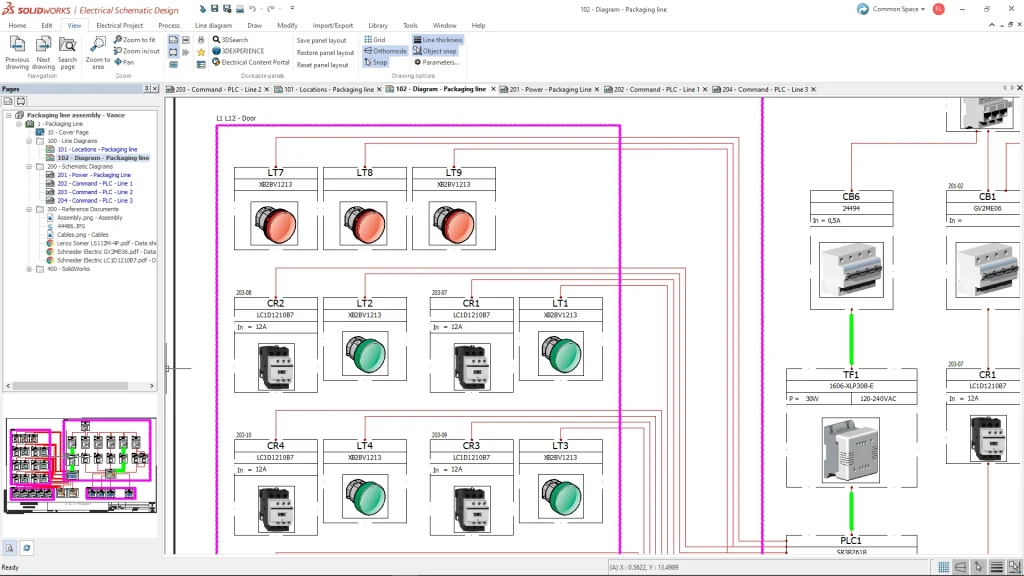
Electrical Schematic Designer
The 3DEXPERIENCE Electrical Schematic Designer simplifies electrical system design with specific tools for engineers to accelerate electrical system and control panel design.