






As engineers we are always looking for ways to improve how things are done. When it comes to manufacturing cells, that could be the process of creating our commercial product or the process of creating the manufacturing cell that produces the product. In either case, DELMIA Robotics Simulation plays a central role.
Learn how DELMIA robotics simulation helps us design and implement our robot factory concepts efficiently. Watch the video below to learn DELMIA Robotics on the 3DEXPERIENCE platform can be used to simulate and virtually validate robot behaviour on the shop floor:
https://youtu.be/0QPRmOpCo3A
DELMIA Robot Simulation practical example for Spot Welding
We’ll start our discussion assuming someone has a process plan for fabricating an assembly. They understand how many spot welds are required and they have basic tooling concept planned. Based on the amount of welding and the desired production time, the number of robots required, and their basic responsibilities have been defined.
Step 1: Spot Weld Gun Selection
Using DELMIA Robotics Simulation, we are able to try several weld guns from our library to determine which guns can access the welds required at each station. The shape of the gun shanks and their orientation allow us to standardize on one or a few guns that will be required for out process.
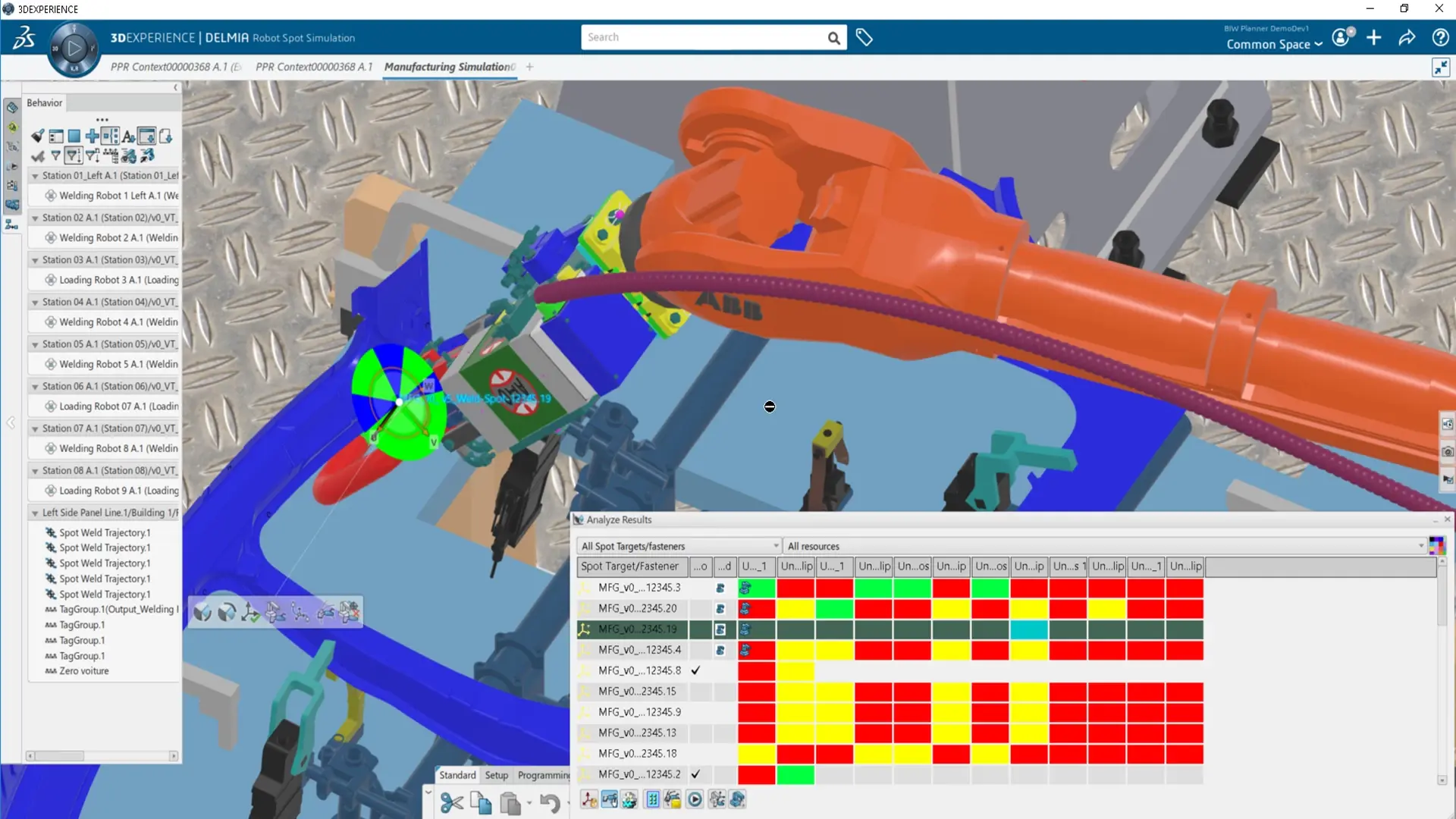
BENEFIT: By limiting the number of guns used in a process, we require fewer spare parts, and we can move forward with the purchase of these guns while the remainder of robot programming is completed. This saves spare part cost and allows the overall project timeline to be shorter.
Step 2: Robot Reach and Placement
In conjunction with the gun selection, we also use simulations to place the robots in the best possible place to reach all of their tasks and reduce the footprint of the cell. Engineers have several variables that can be manipulated to help with robot positioning. These include the X/Y location of the robot, the rotation of the robot, the addition of a robot riser to change the Z position, and the modification of the end effector to change the angle that the robot interfaces with tooling.
Modifications are often necessary when a process changes after the original design or as a way to reduce the size of a cell by bringing equipment closer together. The axis limits of a robot will sometimes require changes like this stay within their joint limits for specific tasks.
BENEFIT: Robot placement and configuration can often allow the reduction in the footprint size of a cell saving floor space and money.
Step 3: Path Development & Tooling Validation
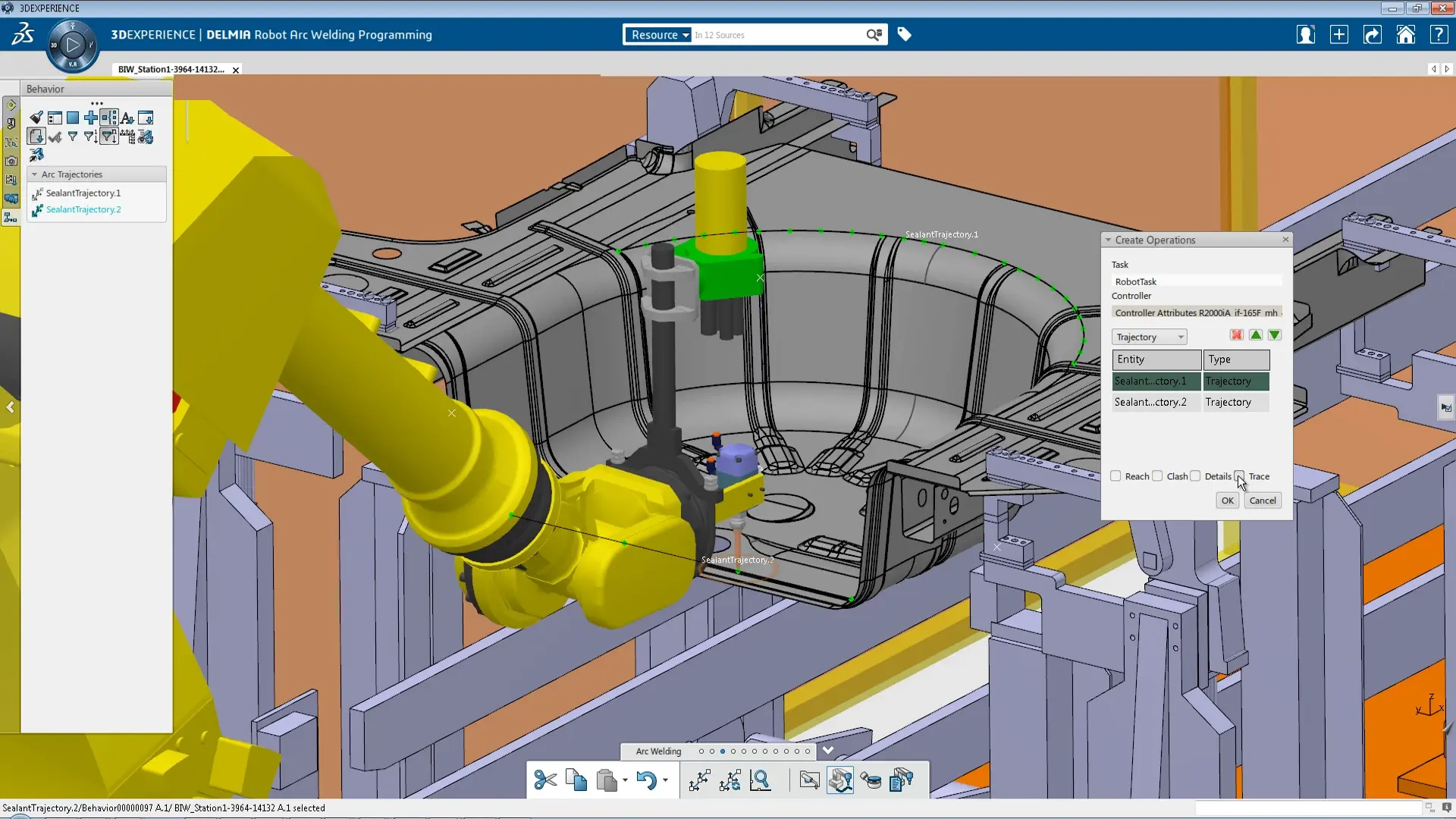
The next step in the process is to develop a collision free path for the robot to complete its tasks. As part of this path creation, the engineer will work with tooling designers to modify tooling where collisions occur or where changes can allow the robot to operate faster.
BENEFIT: By validating the tooling virtually, the fabrication can begin sooner and the number of engineering changes required to the tooling are greatly reduced saving time and money on the project.
Step 4: Line Balancing and Cycle Time Analysis
Once we know we have collision free access to the robot tasks, the engineer can begin evaluating the cycle time for each robot and balancing the workload. The software is constructed to allow moving tasks between robots to even out the amount of time required by each robot and to compare it to the target cycle time for the cell. Cells are often designed with pickup or respot stations that do not have any planned tasks but instead serve to handle overflow from other robots to achieve cycle time. This gives the engineer the freedom to move tasks and achieve the design goals of the cell.
BENEFIT: A balanced workload allows for the minimum number of robots to be purchased while allowing the system to reach target production. This provides confidence to the team that last minute changes will not be required and optimizes the cost of the system.
Step 5: Offline Programming and Documentation
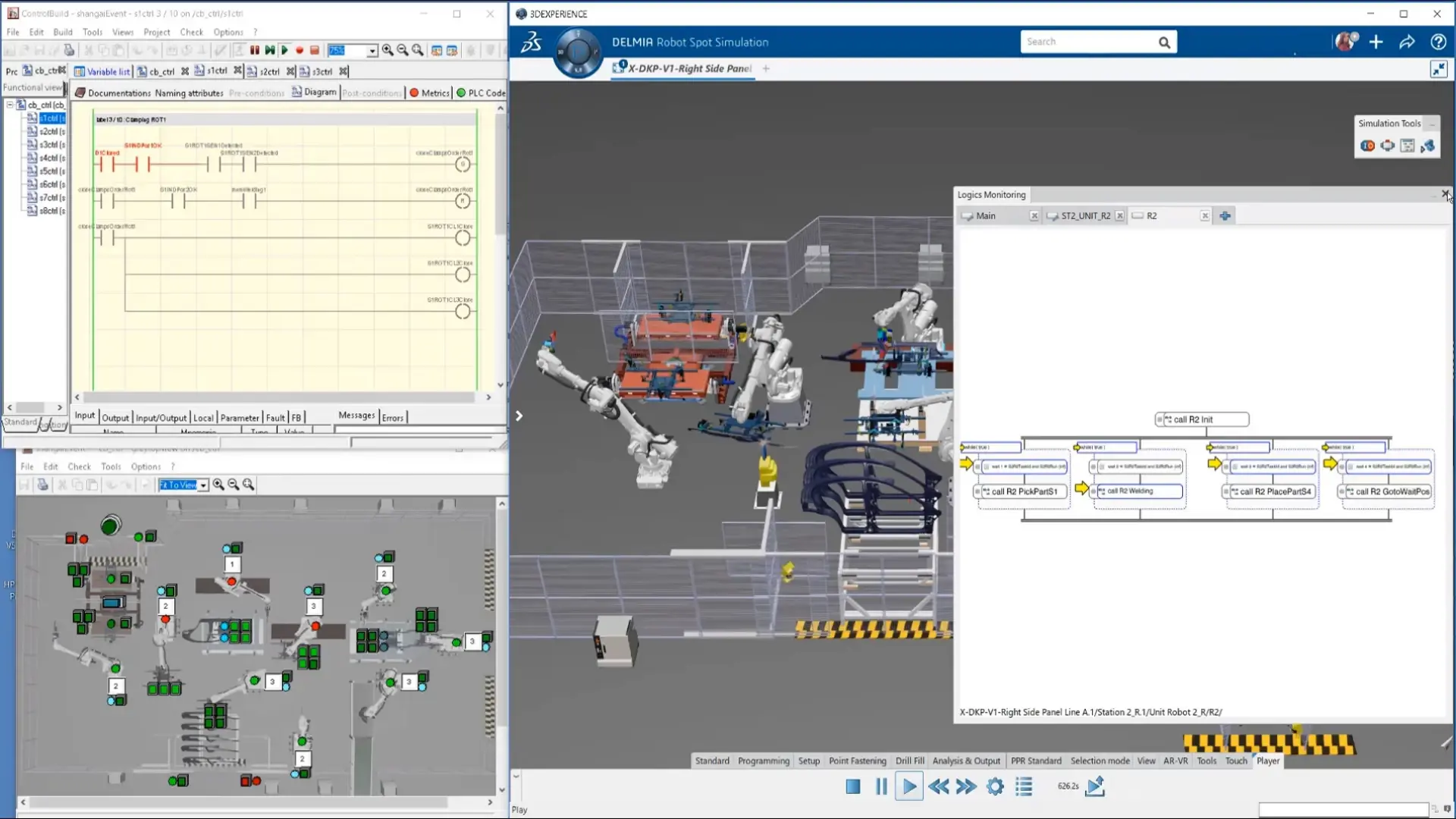
The last step in the project is to create the actual programs to run the robots on the floor and provide documentation to mount equipment and place it in the factory. The engineer can also be more aggressive with their use of the robot since they are programming a virtual robot not trying to hand teach the real one on the floor. This leads to faster cycle times without the risk of crashing during the programming.
BENEFIT: Faster programs created offline that reduces launch time and cuts commissioning time and costs dramatically from traditional teach pendant approaches.
DELMIA Robotics Simulation Summary
DELMIA Robotics programming in a virtual work environment provides better programs that avoid collision, run faster than their hand taught alternatives. Doing the programming in parallel with design finds mistakes sooner and allows the overall project timeline to be compressed significantly.
Related Content

The Uses of Realistic Simulation for Consumer-Packaged Goods & Retail
Both during and following the pandemic, uncertainty and unpredictability has hampered businesses across the globe. This is particularly problematic within the consumer-packaged goods (CPG) sector. In order to be competitive in the present environment, and bring better products to market more quickly, all while cutting costs, many organizations are confronting an urgent need to simplify…

Addressing the 7 Key Challenges faced by the Consumer-Packaged Goods Industry
Customers in the Consumer-Packaged Goods (CPG) and Retail sectors of the market are more interested in collaborative product experiences than they are in pricing and product quality alone these days. Customers will go on to another brand or retailer if they are not met with these expectations. Prominent CPG and retail corporations are utilizing digital…

Achieve Future-Ready Operations across the CPG Sector with the Virtual Twin Roadmap
The establishment of future-ready, robust and agile operations from beginning to end requires readiness as complexities rise. This blog will examine the potential benefits of using the Virtual Twin roadmap to ensure you can optimize your manufacturing processes and supply chain while managing ever-changing constraints to build future operations. Preventing Disruptions The times we live…