






Delmia Ergonomics
Analyse and predict human comfort, safety and performance
DELMIA ergonomics analysis enables efficient evaluation of workplace and product designs through a 3D immersive environment.
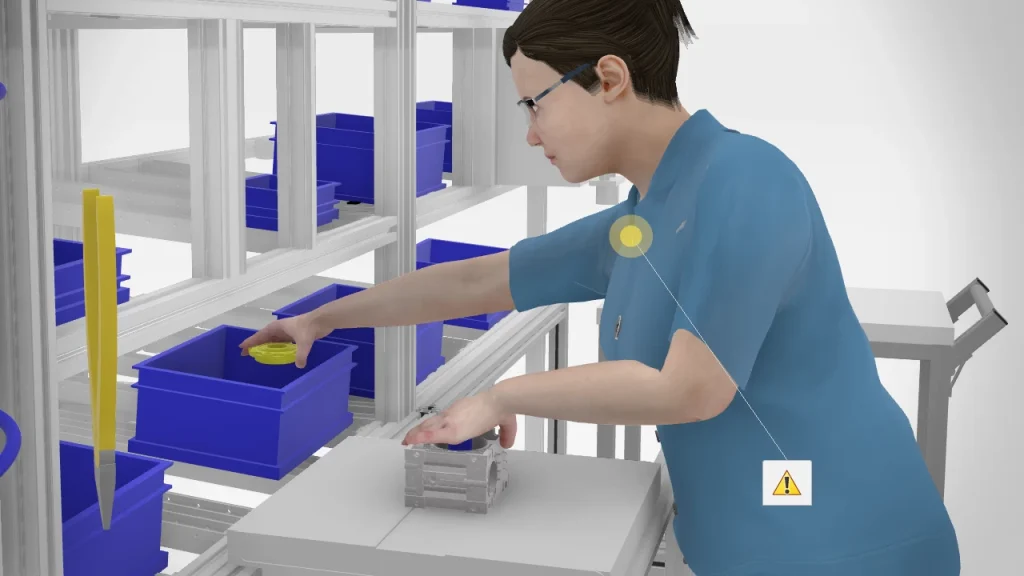
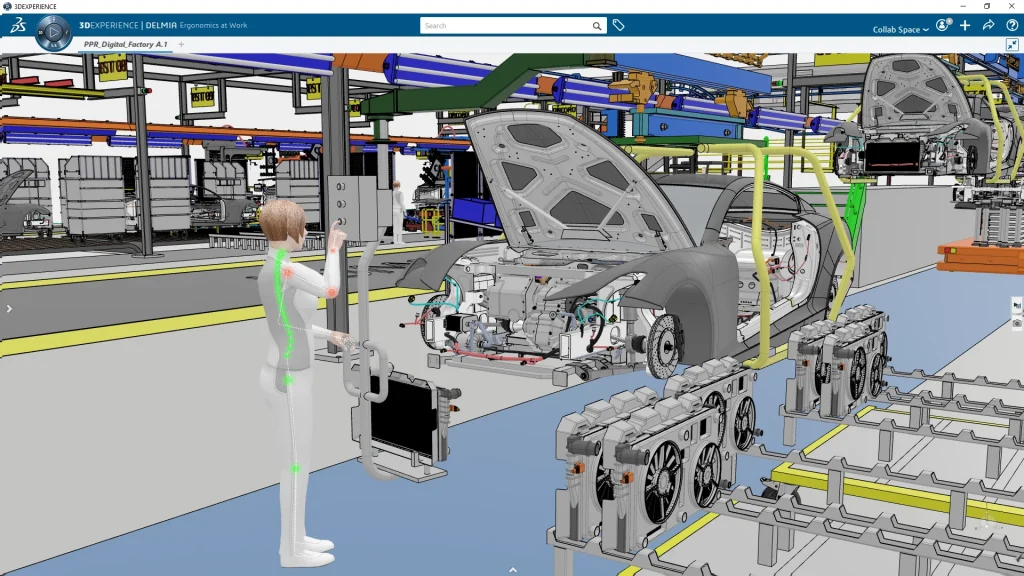
DELMIA Ergonomics Analysis allows users to analyze and predict human comfort, safety and performance for targeted populations directly within the 3D virtual environment. These analysis capabilities enable engineers to examine, score and iterate whole body and specific segment postures to determine a person’s safety level, as well as their ability to perform defined work in the context of a product or workplace design.
Trimech Delimia Solution
Study ergonomics issues with DELMIA:
Video Introduction
Workplace Ergonomics with DELMIA 3DEXPERIENCE

TriMech Ergonomic Solutions
Solves Ergonomic Problems
Ready-to-use Ergonomic Solutions to Design, Simulate, Analyse and Validate Worker Assembly and Maintenance Tasks.
Your Workforce is as Important as the products they manufacture. Targeted for consultants and SMB companies that want to study basic and advanced ergonomics issues within their manufacturing environments, DELMIA offers a ready-to-use, role-based ergonomics solution to evaluate and explore human activity in the workplace.
Human workplace simulation and human work analysis provide such organisations with ergonomic tools specifically geared towards understanding and simulating the worker task for the products they manufacture, install, operate and maintain.
DELMIA Benefits:

Ergonomics Solutions
Make more efficient and safer workplaces
DELMIA provides solutions for Rapid Upper Limb Assessment, Lifting and Lowering Analysis, Push, Pull and Carry Analysis, and Biomechanics Analysis with 3D manikins.
Based on the position and the load (weight of an object) specified on the manikin’s segments, this analysis will calculate the moments and forces being applied to each joint. This analysis also provides an indication of the percentage of the manikin’s population that will be unable to perform this action.
Solution highlights:
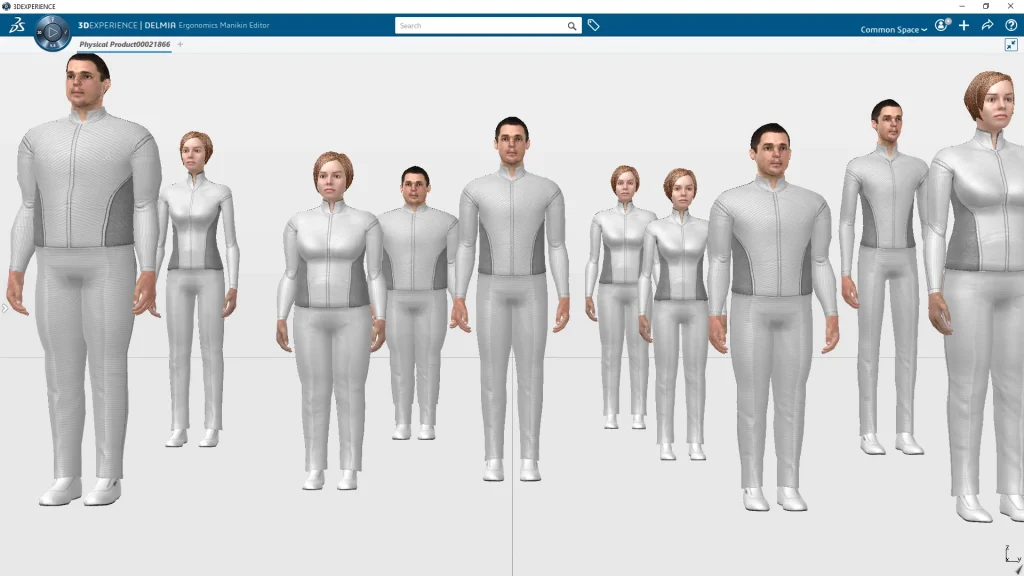
- Creation of user-defined manikins to cover targeted populations
- Comfort, strength or safety scoring for postures with colour coding
- Customisation of range of motion for each joint
- Capture and re-use of ergonomic enterprise standards
- Lowering of work-related injuries because ergonomics concerns can be identified early in the design process